
The way patients find hospitals, clinics, doctors, and healthcare services has changed significantly. Today, many people search online before choosing a healthcare provider, checking reviews, comparing services, or booking an appointment. This makes having a strong online presence essential for hospitals and clinics that want to connect with potential patients.
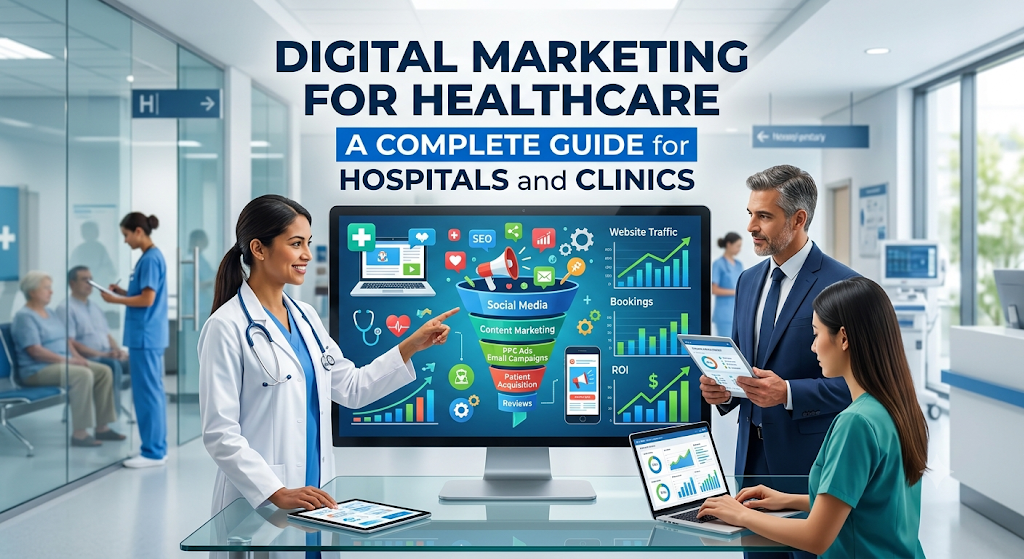
Digital Marketing for Healthcare provides a structured way for healthcare organizations to reach their target audience through search engines, social media, paid advertising, content, and other online channels. When planned correctly, it can help healthcare providers build visibility, communicate their expertise, and make it easier for patients to discover their services.
Why Digital Marketing Matters for Healthcare
Patients increasingly use search engines to find information about symptoms, treatments, specialists, hospitals, and nearby clinics. If a healthcare business does not have a strong digital presence, it may miss opportunities to connect with people actively looking for its services.
A well-planned strategy can help hospitals and clinics improve brand awareness, increase website traffic, generate appointment enquiries, and maintain better communication with their audience. It also provides measurable data that can help healthcare businesses understand which marketing channels are delivering results.
For healthcare providers, building trust is particularly important. Professional website content, accurate information, positive reviews, and consistent communication can all contribute to a credible online presence.
Key Strategies for Healthcare Digital Marketing
1. Search Engine Optimization
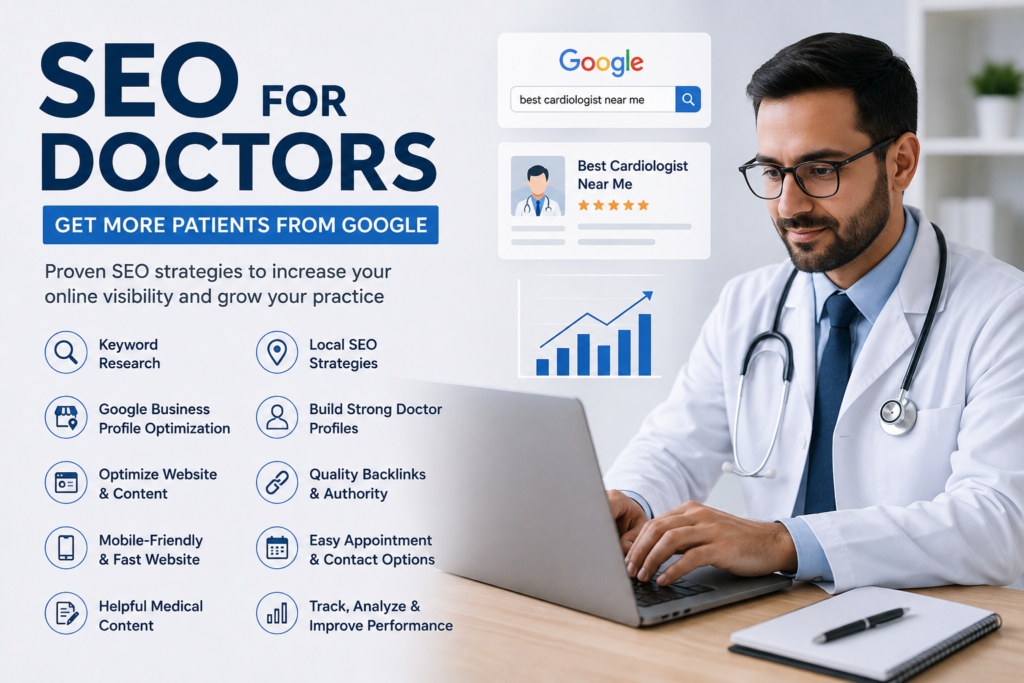
Search Engine Optimization (SEO) helps healthcare websites appear when people search for relevant services. Hospitals and clinics can optimize pages around services, specialties, treatments, locations, and frequently searched healthcare topics.
For example, a clinic could create optimized pages around services such as dermatology, cardiology, dental care, physiotherapy, or diagnostic testing. Helpful and informative content can also attract users researching specific healthcare questions.
Healthcare SEO should focus on useful information, technical website performance, relevant keywords, clear page structures, and trustworthy content.
2. Local SEO
For hospitals and clinics, location can strongly influence a patient’s decision. Local SEO helps healthcare businesses become more visible to people searching for services in a specific area.
Maintaining an accurate Google Business Profile, adding relevant business information, collecting genuine patient reviews, and keeping location details consistent across online directories can support local visibility.
A strong local presence makes it easier for potential patients to find important information such as services, operating hours, location, and contact details.
3. Content Marketing
Healthcare content should educate rather than simply promote services. Blogs, FAQs, guides, videos, and informative service pages can answer common questions and help establish a healthcare organization as a reliable source of information.
Topics can include treatment explanations, preventive healthcare, preparation guidelines, frequently asked questions, and general wellness information. Content should be accurate, easy to understand, and reviewed appropriately where necessary.
Consistent content creation can also provide additional opportunities to target relevant search queries and bring visitors to the website.
4. Google Ads and Paid Advertising
Paid search advertising can help healthcare businesses reach users who are actively searching for specific services. Campaigns can be structured around treatments, specialties, locations, or appointment-related searches.
For example, a clinic may create campaigns targeting searches related to a particular medical specialty in its service area. Effective landing pages, clear calls to action, relevant keywords, and accurate conversion tracking are important components of a paid advertising campaign.
Healthcare advertising should also follow applicable advertising policies and avoid unsupported or misleading claims.
5. Social Media Marketing
Social media gives hospitals and clinics another channel for communicating with their audience. Healthcare organizations can share educational posts, health awareness content, doctor introductions, service information, FAQs, and general wellness tips.
Platforms such as Instagram, Facebook, YouTube, and LinkedIn can be selected based on the target audience and the organization’s communication goals.
The objective should be to provide useful information and maintain consistent engagement rather than relying solely on promotional content.
The Importance of Trust and Reputation
Trust plays a central role in healthcare marketing. Patients want to feel confident about the organization or professional they choose.
Healthcare businesses should therefore maintain accurate information across their website and online profiles. Genuine reviews can provide social proof, while clear information about services, doctors, facilities, and appointment processes can make the patient journey easier.
Online reputation management should also include monitoring reviews and responding professionally to feedback while respecting patient privacy.
Measuring Digital Marketing Performance
A healthcare marketing strategy should be measured using meaningful performance indicators. Depending on the organization’s goals, these may include organic traffic, keyword visibility, website enquiries, phone calls, appointment requests, form submissions, and advertising performance.
Tracking these metrics allows hospitals and clinics to identify which channels are generating interest and where improvements may be required.
How IndoAge Can Help
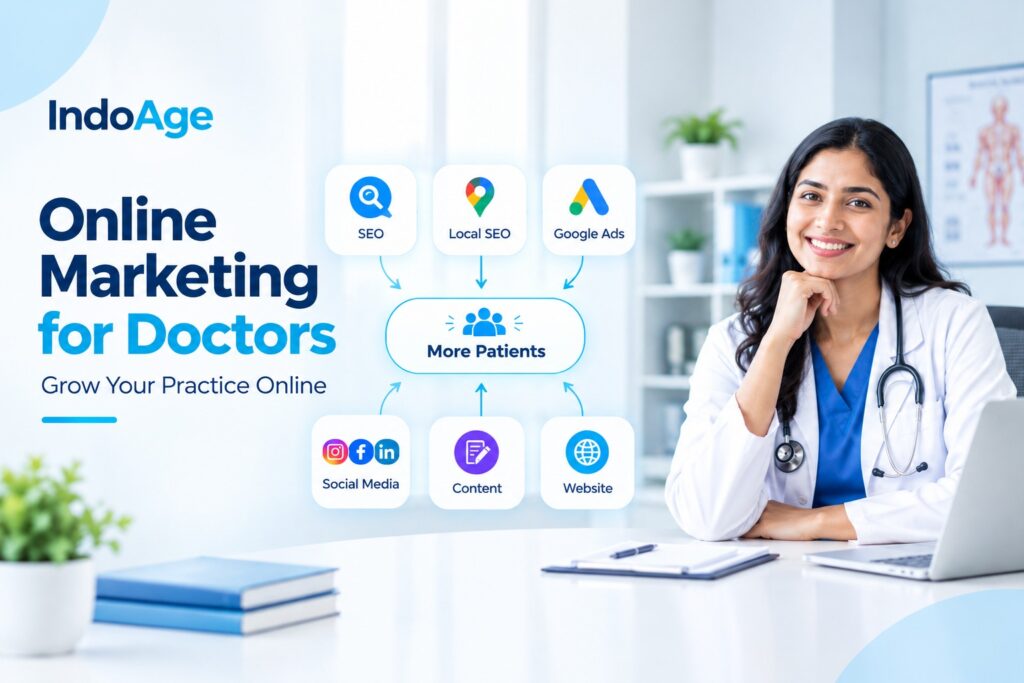
Digital Marketing for Healthcare requires a combination of search optimization, paid advertising, content, local visibility, social media, and a well-structured website. IndoAge provides digital marketing services designed to help businesses strengthen their online presence and reach relevant audiences.
For healthcare organizations, the focus can be on creating a digital strategy that connects useful content with the right audience while supporting measurable business objectives. From healthcare SEO and local search optimization to PPC and content marketing, a coordinated approach can help create a stronger online foundation.
Conclusion
Digital Marketing for Healthcare has become an important part of how hospitals and clinics communicate with today’s digitally connected patients. A combination of SEO, Local SEO, content marketing, paid advertising, social media, reputation management, and website optimization can help healthcare organizations build greater online visibility.
The most effective approach is not simply about appearing online. It is about providing accurate information, building trust, creating a convenient patient journey, and continuously improving marketing efforts based on measurable data. With a thoughtful strategy and consistent execution, hospitals and clinics can create a stronger digital presence and connect with people searching for healthcare services online.