
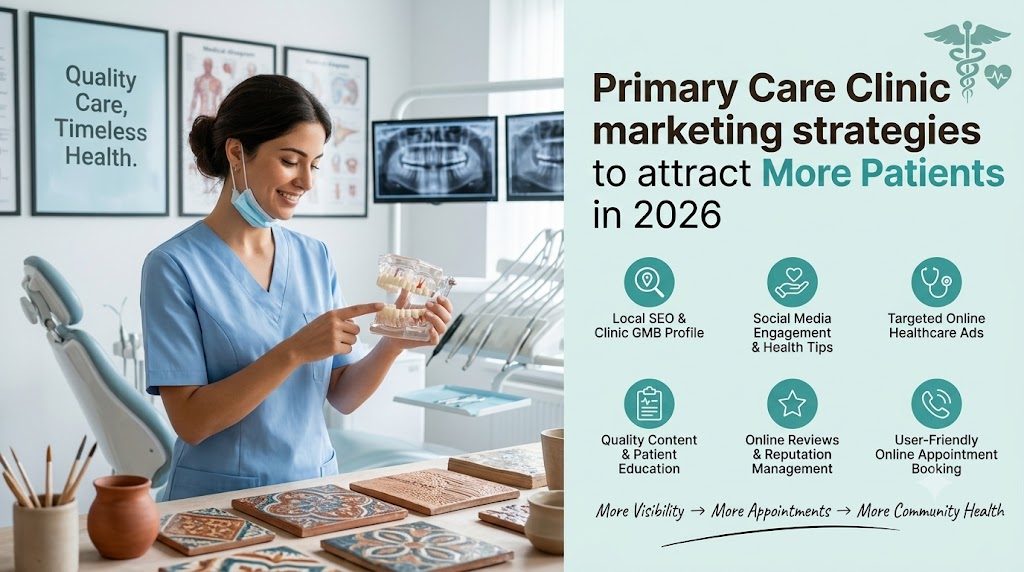
The dental industry is becoming increasingly competitive, making it important for clinics to build a strong online presence and connect with potential patients. Today, people often search online before choosing a dentist, comparing clinic locations, services, patient reviews, and appointment availability. A well-planned Dental Clinic Marketing strategy helps dental practices improve visibility, build trust, and attract more patient enquiries.
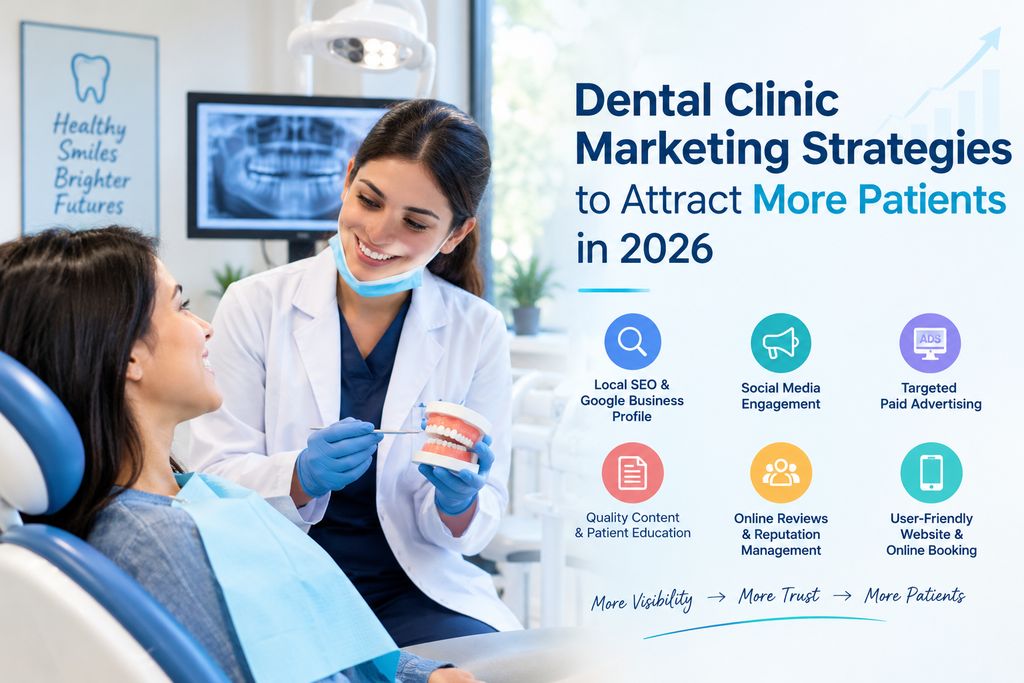
In 2026, dental clinics can use search engine optimisation (SEO), Google Business Profile optimisation, paid advertising, social media, and informative content to reach the right audience. By combining these strategies, dentists can establish credibility and encourage more people to book appointments.
1. Improve Your Dental Clinic’s Local SEO
Local SEO is one of the most effective ways to help potential patients discover a dental clinic in their area. When people search for terms such as “dentist near me” or “dental clinic in Kolkata,” search engines display relevant local businesses.
To improve local visibility, clinics should optimise their Google Business Profile with accurate contact information, opening hours, service descriptions, photographs, and appointment links. Keeping this information updated makes it easier for patients to find and contact the clinic.
Dental clinics should also create dedicated website pages for important services, including teeth cleaning, dental implants, orthodontics, root canal treatment, and cosmetic dentistry. Including relevant location-based keywords naturally in website content can help attract patients searching for these treatments nearby.
2. Build a Professional and User-Friendly Website
A dental clinic website often creates the first impression for potential patients. A professional website should clearly explain the clinic’s services, introduce the dental team, provide contact details, and make appointment booking straightforward.
Mobile responsiveness is particularly important because many people search for healthcare services using smartphones. Pages should load quickly, navigation should be simple, and important information should be easy to access.
Include clear calls to action such as “Book an Appointment,” “Call Our Clinic,” and “Explore Our Services.” Adding frequently asked questions about treatments, appointments, and general dental care can also help visitors find answers before contacting the clinic.
An informative website supports a wider Dental Clinic Marketing plan by turning website visitors into potential patients.
3. Use Google Ads to Generate Patient Enquiries
Google Ads can help dental clinics reach people actively searching for dental services. Unlike strategies that take time to build organic visibility, paid search campaigns can place relevant clinic advertisements in front of potential patients when they search for specific treatments.
Clinics can create separate campaigns for services such as dental implants, teeth whitening, braces, and emergency dental care. Targeting relevant locations and carefully selecting keywords can help reduce irrelevant clicks and improve advertising efficiency.
Each advertisement should direct users to a relevant landing page containing treatment information, clinic details, and a simple enquiry or appointment form. Tracking calls, completed forms, and confirmed bookings helps clinics understand which campaigns generate meaningful results.
Advertising content should remain accurate and professional, with appropriate consideration for healthcare advertising policies and applicable regulations.
4. Create Helpful Social Media Content
Social media provides dental clinics with an opportunity to educate audiences and build familiarity with their practice. Platforms such as Instagram and Facebook can help clinics share useful information and communicate with potential patients.
Content ideas include daily oral hygiene tips, explanations of common dental procedures, frequently asked questions, introductions to the dental team, and reminders about routine dental check-ups.
Short videos can explain topics such as proper brushing techniques, the importance of flossing, and what patients can generally expect during a dental visit. With appropriate consent and privacy safeguards, clinics can also share genuine patient feedback or approved testimonials.
Consistency matters more than posting frequently without a clear purpose. A practical content calendar helps maintain a steady flow of relevant, informative posts.
5. Encourage Genuine Patient Reviews
Online reviews influence how people evaluate healthcare providers. Positive, authentic feedback can help potential patients feel more confident when considering a dental clinic.
Clinics can invite patients to leave honest reviews through a polite follow-up message or a convenient review link. Staff should never pressure patients to provide positive ratings or offer incentives in exchange for favourable reviews.
Responding professionally to feedback demonstrates that the clinic values patient experiences. Responses should protect patient confidentiality and avoid confirming someone’s treatment or relationship with the clinic without appropriate permission.
Regularly monitoring reviews can also reveal areas where communication, appointment scheduling, or the overall patient experience could be improved.
6. Publish Educational Blogs to Build Trust
Blogging allows dental clinics to answer common patient questions and improve their website’s visibility for relevant searches. Useful topics include “How Often Should You Visit a Dentist?”, “What to Expect During a Root Canal Treatment,” and “How to Maintain Healthy Teeth and Gums.”
Each article should provide accurate, easy-to-understand information and avoid unsupported treatment claims. Linking relevant blog posts to appropriate service pages helps readers discover additional information about the clinic.
Publishing valuable content consistently can support SEO, strengthen credibility, and give potential patients more reasons to explore the website.
7. Measure Marketing Performance and Improve Results
Successful marketing requires regular performance monitoring. Dental clinics should track website traffic, local search visibility, appointment enquiries, phone calls, form submissions, and confirmed bookings.
Tools such as Google Analytics and Google Search Console can help identify how visitors discover a website and which pages attract attention. Advertising platforms can provide additional information about campaign performance and enquiry costs.
Clinics should focus on meaningful outcomes rather than website visits alone. Reviewing performance monthly helps identify effective channels, improve underperforming campaigns, and allocate budgets more efficiently.
Conclusion
Attracting more patients in 2026 requires a combination of local SEO, a professional website, targeted advertising, useful social media content, genuine patient reviews, and informative blogging. These strategies help dental clinics become easier to discover and build stronger relationships with prospective patients.
A consistent Dental Clinic Marketing approach enables dental practices to strengthen their online presence, generate relevant enquiries, and create a more convenient experience for patients. With the right planning, regular performance analysis, and a focus on patient trust, clinics can build a sustainable foundation for long-term growth.
Businesses seeking professional support can work with IndoAge to develop digital marketing strategies tailored to their goals, audience, and local market.