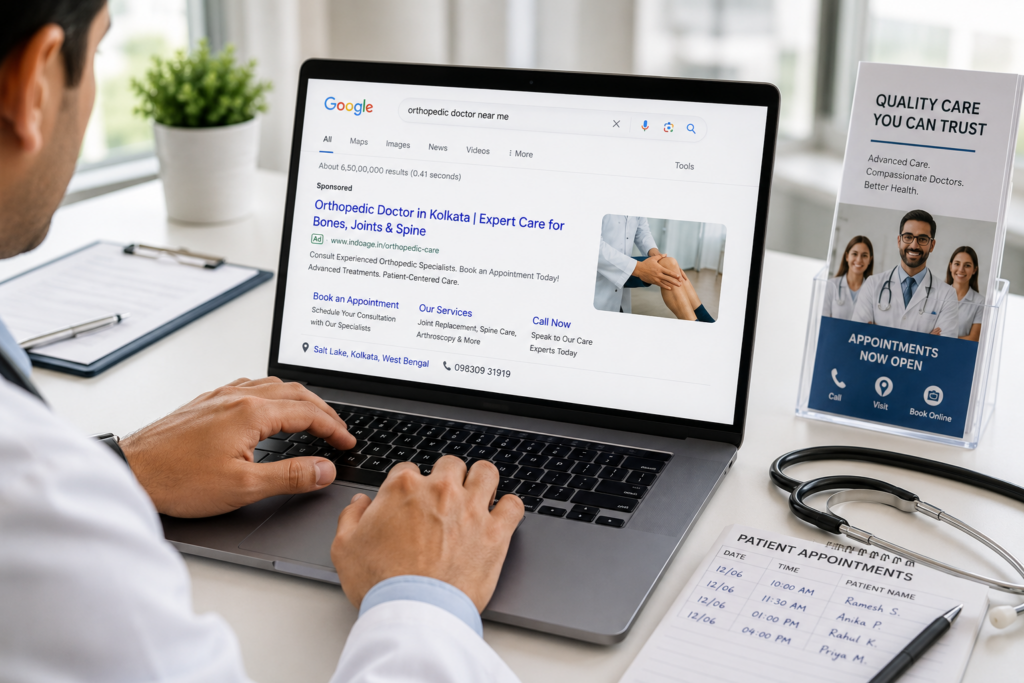
When people need a doctor, one of the first places they turn to is Google. They search for specialists, compare clinics, check reviews, explore treatment options, and look for a convenient location before deciding where to book an appointment. For doctors and healthcare practices, being visible in these searches can make a significant difference to patient acquisition.
SEO for Doctors is about improving a medical website and its online presence so that it appears when potential patients search for relevant healthcare services. A well-planned SEO strategy can increase organic visibility, bring relevant visitors to your website, build credibility, and encourage more appointment enquiries.
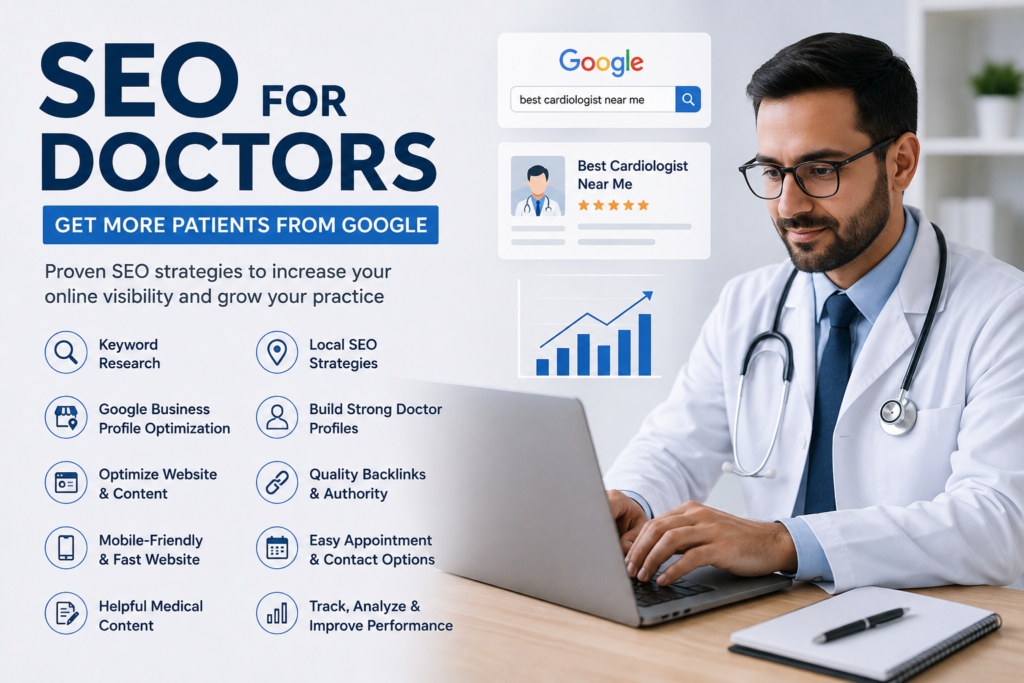
Here are 10 strategies that can help doctors improve their visibility on Google.
1. Target the Right Healthcare Keywords
Effective SEO starts with understanding what your potential patients are searching for. Rather than focusing only on broad keywords such as “doctor” or “hospital,” identify specific searches related to your specialty, services, treatments, and location.
For example, patients may search for terms such as “dermatologist in Kolkata,” “cardiologist in Delhi,” “diabetes specialist near me,” or “skin treatment clinic in Bangalore.”
These specific searches often indicate stronger intent because the user already knows what type of healthcare service they are looking for. Create content and website pages that address these search terms naturally instead of trying to target every keyword on a single page.
2. Optimize Your Google Business Profile
For doctors who serve local patients, Google Business Profile optimization should be an important part of the strategy. Your profile can help your practice appear in local search results and Google Maps when people search for healthcare services nearby.
Ensure that your practice name, address, phone number, website, category, operating hours, and services are accurate. Add professional photographs and keep your profile information updated.
Patient reviews can also influence how people perceive your practice. Encourage genuine patients to share their experiences and respond to reviews in a professional and helpful manner.
3. Create Dedicated Service Pages
Putting all your treatments and services on one page can make it difficult for search engines and patients to understand what your practice offers.
Instead, create individual pages for important services and specialties. A dermatologist, for example, could have separate pages for acne treatment, hair loss treatment, skin allergies, and cosmetic dermatology.
Each service page should provide useful information about the treatment, explain who it may be suitable for, highlight the doctor’s expertise, and include a clear option to contact the practice or request an appointment.
4. Publish Helpful Healthcare Content
Patients often search Google with questions before deciding whether to consult a doctor. Your website can address these questions through useful and informative content.
Consider creating articles around common symptoms, treatment options, preventive care, preparation guidelines, recovery information, and frequently asked questions.
The objective should not simply be to insert keywords into an article. Healthcare content should be written clearly for patients and provide accurate, useful information. Demonstrating relevant expertise and maintaining reliable content can also help build trust with both users and search engines.
At IndoAge, healthcare businesses can develop content strategies that combine search intent with useful information designed around the needs of their target audience.
5. Focus on Local SEO
Local search is particularly important for medical practices because patients generally prefer healthcare providers who are accessible from their home or workplace.
Use relevant city, neighbourhood, and location terms naturally on your website. Maintain consistent business information across important online platforms and create location-specific pages only where your practice genuinely serves those areas.
For example, a clinic in Kolkata can create useful content related to its specialty and the patients it serves instead of creating multiple repetitive location pages simply to target different keywords.
6. Improve Website Speed and Mobile Usability
A large number of people search for doctors using smartphones. If your website takes too long to load or is difficult to use on a mobile device, visitors may leave before they find the information they need.
Make important information such as doctor profiles, services, phone numbers, appointment options, and clinic addresses easy to access.
Compress large images, reduce unnecessary website elements, and ensure that pages work properly across different screen sizes. A fast, straightforward website provides a better experience for patients and makes it easier for them to take action.

7. Build Detailed Doctor Profiles
Patients want to know about the professional they are considering for their healthcare needs. A detailed doctor profile can help establish confidence before a patient makes an appointment.
Include relevant qualifications, specialties, experience, professional memberships, areas of expertise, and achievements. Where appropriate, clearly identify the healthcare professional responsible for medical content published on the website.
A transparent and informative profile allows visitors to better understand the doctor’s background and expertise.
8. Earn Relevant, High-Quality Backlinks
Backlinks from credible and relevant websites can support a healthcare website’s overall authority. However, the focus should be on quality rather than simply collecting a large number of links.
Healthcare practices can explore opportunities through professional organizations, healthcare publications, interviews, local publications, educational resources, and reputable industry websites.
Avoid relying heavily on unrelated or low-quality websites simply to increase the number of backlinks. Relevant and trustworthy references are more valuable for building a strong online presence.
9. Make Appointment Booking Simple
Attracting visitors through Google is only one part of the process. Your website also needs to make it easy for those visitors to contact your practice.
Use clear appointment buttons, click-to-call options, enquiry forms, clinic directions, and easily accessible contact details. Keep enquiry forms simple and avoid requesting unnecessary information.
Someone searching for a doctor may already be ready to make an appointment. A straightforward website journey can reduce friction and make it easier for that visitor to become an enquiry.
10. Track and Improve SEO Performance
SEO is an ongoing process rather than a one-time activity. Regularly monitor how your website performs in organic search and identify opportunities for improvement.
Google Search Console and analytics platforms can provide useful information about impressions, clicks, landing pages, search queries, and website engagement.
Monitor important keywords, organic traffic, service-page performance, local visibility, and enquiries generated through organic search. This information can help you understand what is working and where additional optimization may be required.
Grow Your Medical Practice with IndoAge
A successful SEO for Doctors strategy is about much more than ranking for medical keywords. The goal is to help potential patients find the right information, discover your practice, understand your expertise, and take the next step toward an appointment.
For healthcare professionals, SEO for Doctors can become a valuable long-term digital marketing channel when it is supported by useful content, local SEO, technical optimization, credible information, and a conversion-focused website.
IndoAge provides digital marketing solutions for doctors, clinics, hospitals, and healthcare businesses. Its services can include SEO, content marketing, website development, PPC advertising, and other digital strategies designed to strengthen online visibility.
If you want to attract more potential patients through Google, SEO for Doctors provides a strong foundation for building sustainable online visibility. Start by understanding your patients’ search behaviour, create genuinely useful content, optimize your local presence, and use performance data to continuously improve your website.