Patients today often turn to Google and other online platforms before choosing a doctor, clinic, or healthcare provider. Whether they are looking for a nearby specialist, checking reviews, or comparing treatment options, your online presence can influence their decision. This makes Online Marketing for Doctors an important part of building visibility, attracting new patients, and growing a medical practice.
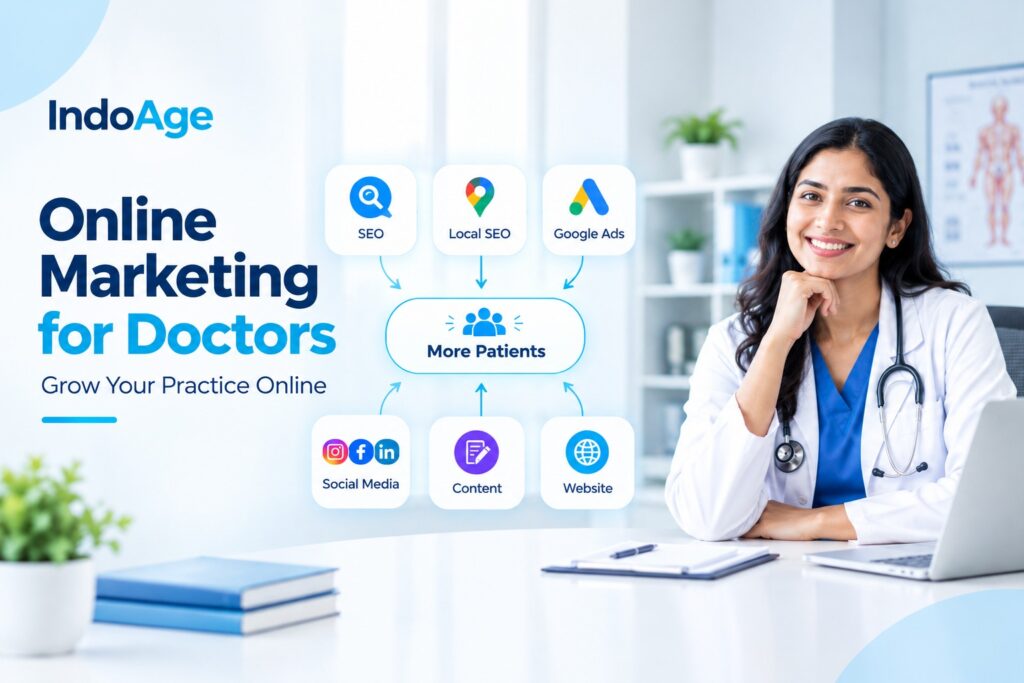
A strong online marketing strategy combines search engine optimization, local SEO, paid advertising, social media, content marketing, and a professional website. When these channels work together, doctors can make it easier for potential patients to discover their services and get in touch.
What Is Online Marketing for Doctors?
Online Marketing for Doctors refers to using digital channels to promote a doctor’s services, medical practice, clinic, or healthcare brand. Instead of relying only on traditional referrals and offline advertising, doctors can use online platforms to reach people actively searching for healthcare services.
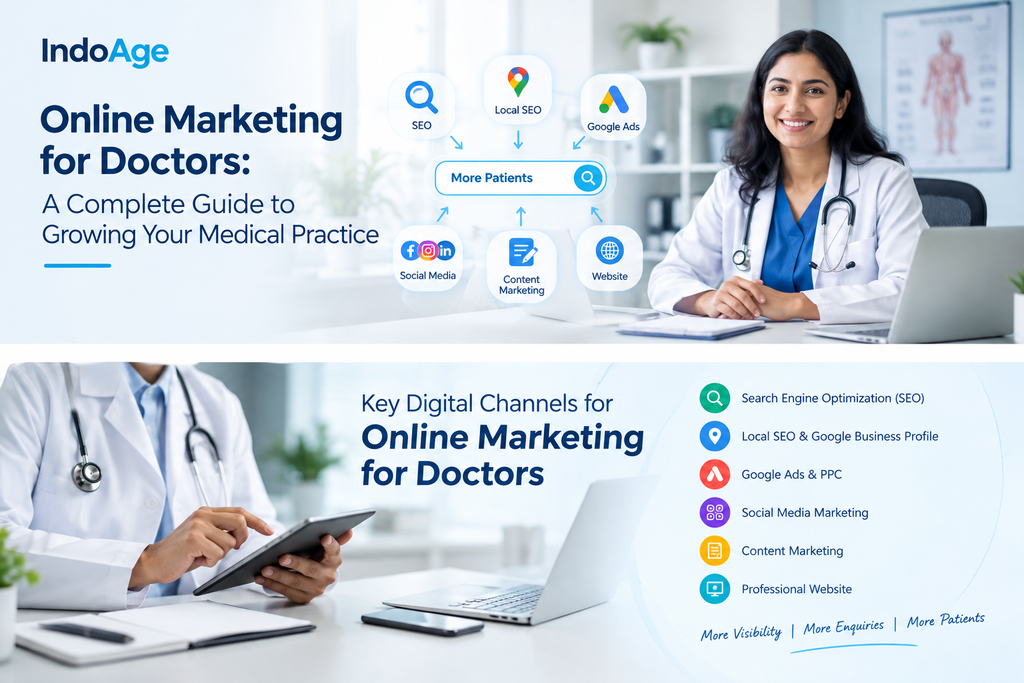
Common online marketing channels include:
- Search engine optimization (SEO)
- Google Business Profile and Local SEO
- Google Ads and PPC advertising
- Social media marketing
- Healthcare content marketing
- Medical practice websites
- Online reviews and reputation management
- Email marketing
The right combination depends on the specialty, location, target patients, competition, and goals of the practice.
Why Is Online Marketing Important for Doctors?
A professional online presence helps doctors become more discoverable when potential patients search for relevant healthcare services. For example, someone searching for “dermatologist near me” or “cardiologist in Kolkata” is already looking for a specific service.
SEO and Local SEO can help a medical practice appear for relevant searches, while Google Ads can provide additional visibility for competitive keywords. A well-optimized website then gives visitors important information about the doctor, services, location, appointment process, and contact options.
Online marketing can also help doctors build credibility. High-quality educational content, accurate information, professional branding, and genuine patient reviews can give prospective patients more confidence when evaluating a practice.
1. Build a Professional Healthcare Website
Your website is the foundation of your online marketing strategy. It should be fast, mobile-friendly, easy to navigate, and designed with patients in mind.
Important pages may include:
- Doctor profile and qualifications
- Medical specialties
- Treatments and services
- Clinic location and contact details
- Appointment information
- Frequently asked questions
- Patient resources or blog
- Testimonials and reviews where appropriate
Each important service should ideally have a dedicated, informative page that answers common patient questions and clearly explains what the practice offers.
2. Invest in SEO for Doctors
Search engine optimization can help your website appear when people search for healthcare services related to your specialty.
For example, a dentist may target keywords such as “dentist in Kolkata,” “root canal treatment in Kolkata,” or “cosmetic dentist near me.” A dermatologist could focus on searches related to acne treatment, hair loss treatment, or dermatology services in their target location.
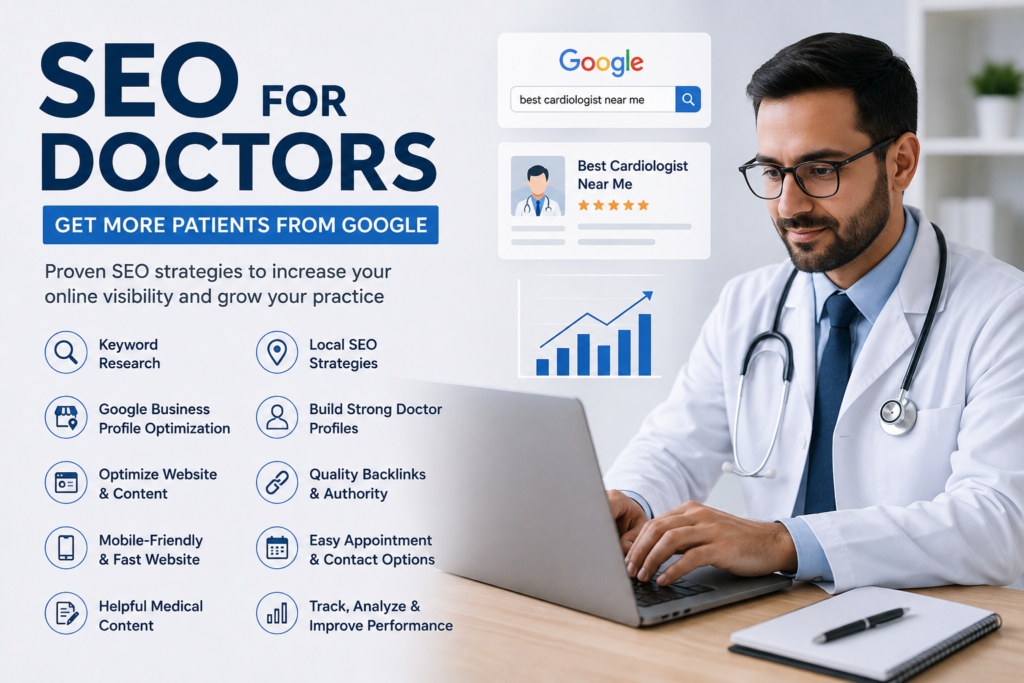
Effective healthcare SEO includes keyword research, quality content, technical SEO, internal linking, structured data, and optimization of important service pages.
The goal should not simply be to generate website traffic. The focus should be on attracting relevant visitors who are genuinely looking for the services you provide.
3. Use Local SEO to Reach Nearby Patients
For doctors and clinics, location can be one of the most important factors in online visibility. Local SEO for doctors helps practices improve their presence in location-based searches.
Start by optimizing your Google Business Profile with accurate information about your practice, including the name, address, phone number, website, working hours, services, and relevant categories.
Encourage genuine patients to leave reviews and respond professionally to reviews. Consistent business information across relevant online directories can also support local visibility.
4. Use Google Ads to Generate Immediate Visibility
SEO can take time to build, while Google Ads can help doctors reach potential patients more quickly for selected searches.
For example, campaigns can target searches such as “orthopedic doctor near me,” “pediatrician in Kolkata,” or “skin specialist in Bangalore.” Ads should lead users to relevant landing pages rather than a generic homepage whenever possible.
Campaign performance should be measured using meaningful actions such as appointment enquiries, phone calls, contact-form submissions, or other legitimate lead actions.
5. Create Helpful Healthcare Content
Content marketing allows doctors to answer questions that potential patients are already searching for online.
Blog topics can include:
- When should you see a specialist?
- What are the common symptoms of a particular condition?
- How does a specific treatment work?
- What should you expect during a consultation?
- Frequently asked questions about a medical procedure
Healthcare content should be accurate, easy to understand, and appropriately reviewed. It should provide useful information rather than making unsupported medical promises.
6. Build a Strong Social Media Presence
Social media can help doctors communicate with their audience and showcase their expertise. Educational posts, health tips, frequently asked questions, short videos, and practice updates can make healthcare information easier to access.
However, healthcare professionals should maintain patient privacy and follow applicable professional and advertising guidelines when creating social media content.
7. Track and Improve Your Results
Successful Online Marketing for Doctors requires ongoing measurement. Important metrics may include organic traffic, keyword visibility, Google Business Profile interactions, website enquiries, phone calls, appointment requests, and advertising performance.
Instead of focusing only on impressions or website visits, practices should identify which marketing activities are contributing to meaningful patient enquiries and optimize campaigns accordingly.
Grow Your Medical Practice With a Strategic Online Presence
Patients are increasingly using digital channels to discover and evaluate healthcare providers. A combination of SEO, Local SEO, Google Ads, content marketing, social media, and a professional website can help doctors build a stronger online presence and connect with relevant audiences.
At IndoAge, we help healthcare businesses develop digital marketing strategies designed around visibility, patient enquiries, and sustainable online growth. With the right strategy and consistent optimization, Online Marketing for Doctors can become an important part of building a stronger and more discoverable medical practice.